Roofing in this area covers leak repair, shingle and flashing fixes, hail and storm damage, tile, metal and flat roofs, and full replacement, and the right path depends on what the roof is doing and how old it is. A roofer needs to see the roof and attic first. Call the number on this page to be connected with a local roofing contractor in Friendswood.
Roofing services in Friendswood
Signs your roof needs a roofer
Look from the yard for lifted or missing shingles, bare strips, cracked tile, bent flashing and sagging ridge lines. Inside, watch for brown ceiling rings, bubbling paint on exterior walls, a musty attic or higher cooling bills. Any of these deserves a roofer's look, since small openings grow quickly in a wet, humid climate.
Flat ground, heavy downpours
Houston rain can arrive fast and in large amounts, overwhelming gutters and flat roof drains. Low-slope porch roofs pond water, which finds seams and fasteners. Clear gutters and drains before storms, and ask the roofer how a flat section is handling water, since standing pools wear membranes quickly.
Roof notes for Friendswood
For permit questions on a reroof, start with the City of Friendswood permit office. A contractor who works here regularly will know whether your job needs anything filed.
After a big storm, out-of-town crews often knock first. TDI suggests checking references and avoiding any contract that asks for most of the money up front.
Part of Friendswood falls in the TDI windstorm inspection area; if your address is inside it, reroofs and roof repairs need a windstorm inspection.
Spring is the peak for severe storms in Southeast Texas, and hail an inch across or larger can bruise shingles in ways that are hard to see from the ground.
Power lines here are run by TNMP (outages: 888-866-7456). Keep away from any line touching the house or a fallen tree.
Calls from Friendswood are often matched with roofers who also cover Webster, League City and Alvin.
What roof repair usually involves
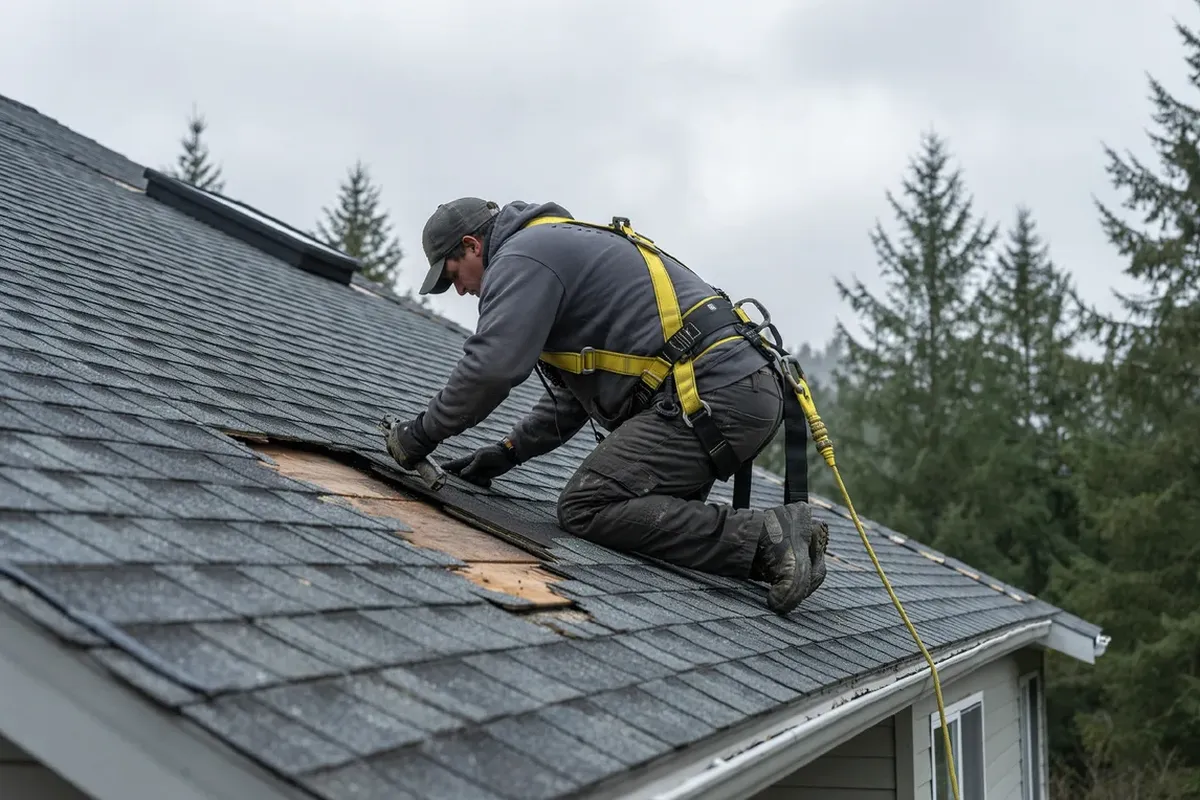
A repair visit replaces the part that failed: a boot, a run of flashing, a handful of shingles, a rotted board or a cracked tile. The roofer finds the cause first, so the fix lasts. Small jobs can wrap up quickly, while hidden rot or special materials may stretch the work across more than one visit.
What roofers see after hail
Roofers look for round bruises on shingles, cracked tile, dents on soft metal, damaged vents and granule piles at downspouts. Hail damage can hide until the next heavy rain, so a prompt check is useful. They may mark spots with chalk to show you what they found.
Flat and low-slope roofs
Additions, porches and commercial buildings often have flat roofs with torch-down, TPO or coated surfaces. They fail at seams, drains and edges, and ponding water speeds wear. Roofers patch seams, recoat or replace membranes depending on condition. Tell the roofer about any pooling after rain.
After the work is done
Walk the property with the roofer, check for stray nails, and ask for photos of concealed work such as new decking. Keep the invoice, warranty details and a record of the materials used. A follow-up look after the next heavy rain confirms the repair is holding.
Common questions in Friendswood
How long does a roof last in this climate?
What should I do right after a storm?
How do I vet a roofer in Texas?
Why do roofs leak around chimneys and skylights?
Nearby cities and towns
Sources
Last updated: